Built by VB Group • over a decade of EHS expertise
Drona VR

US partner licensing · NFPA 70E®

Arc flash training simulator for NFPA 70E trainers and study firms

Drona Arc Flash is a VR arc flash training simulator that NFPA 70E® trainers and arc flash study firms license under their own brand, giving clients hands-on practice and per-worker proficiency records.

VB Group · electrical safety engineering since 2007 · US office: Katy, Texas

Last reviewed:

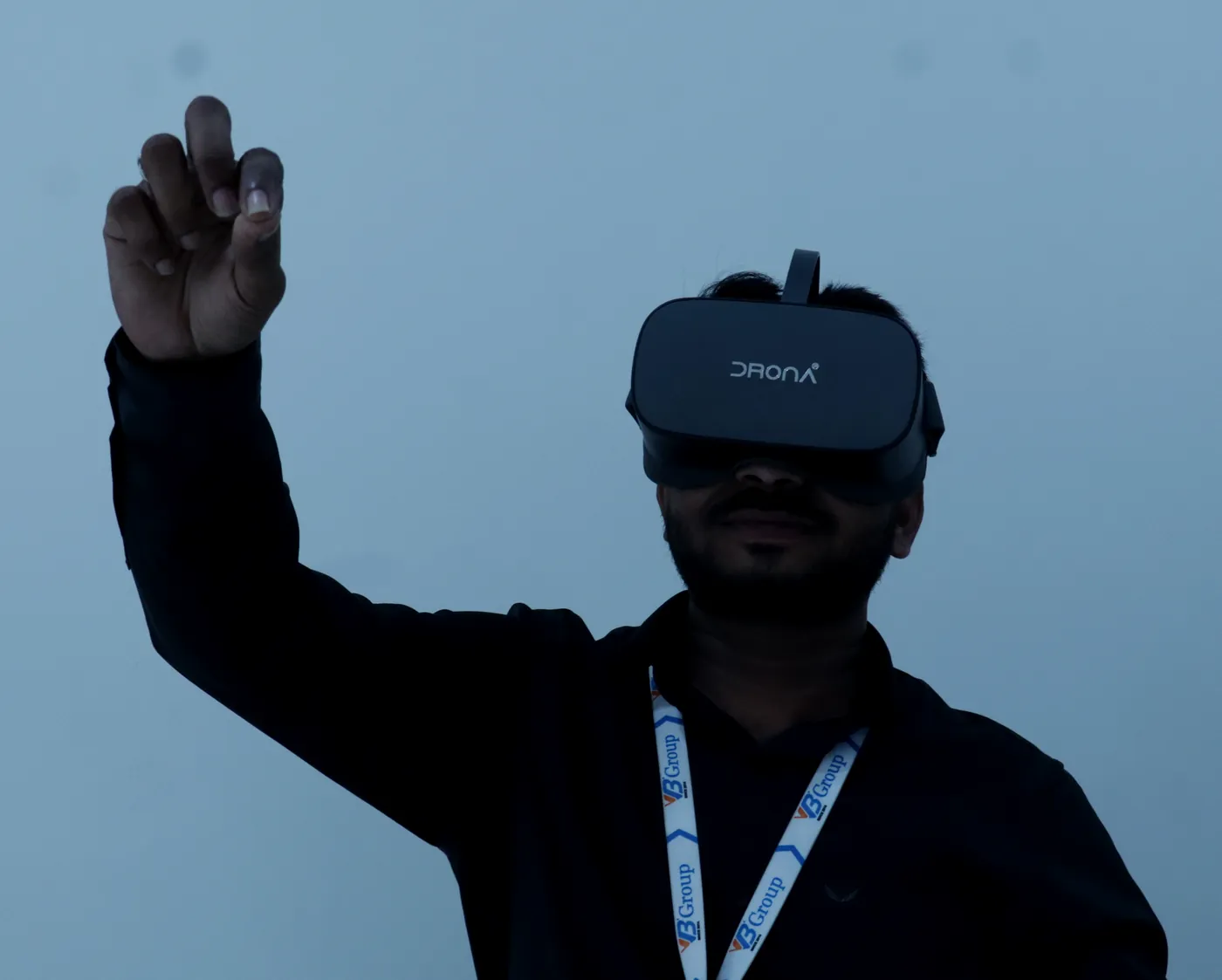
Trainee wearing a Drona VR headset reaching into a virtual scene with hand tracking during a training session
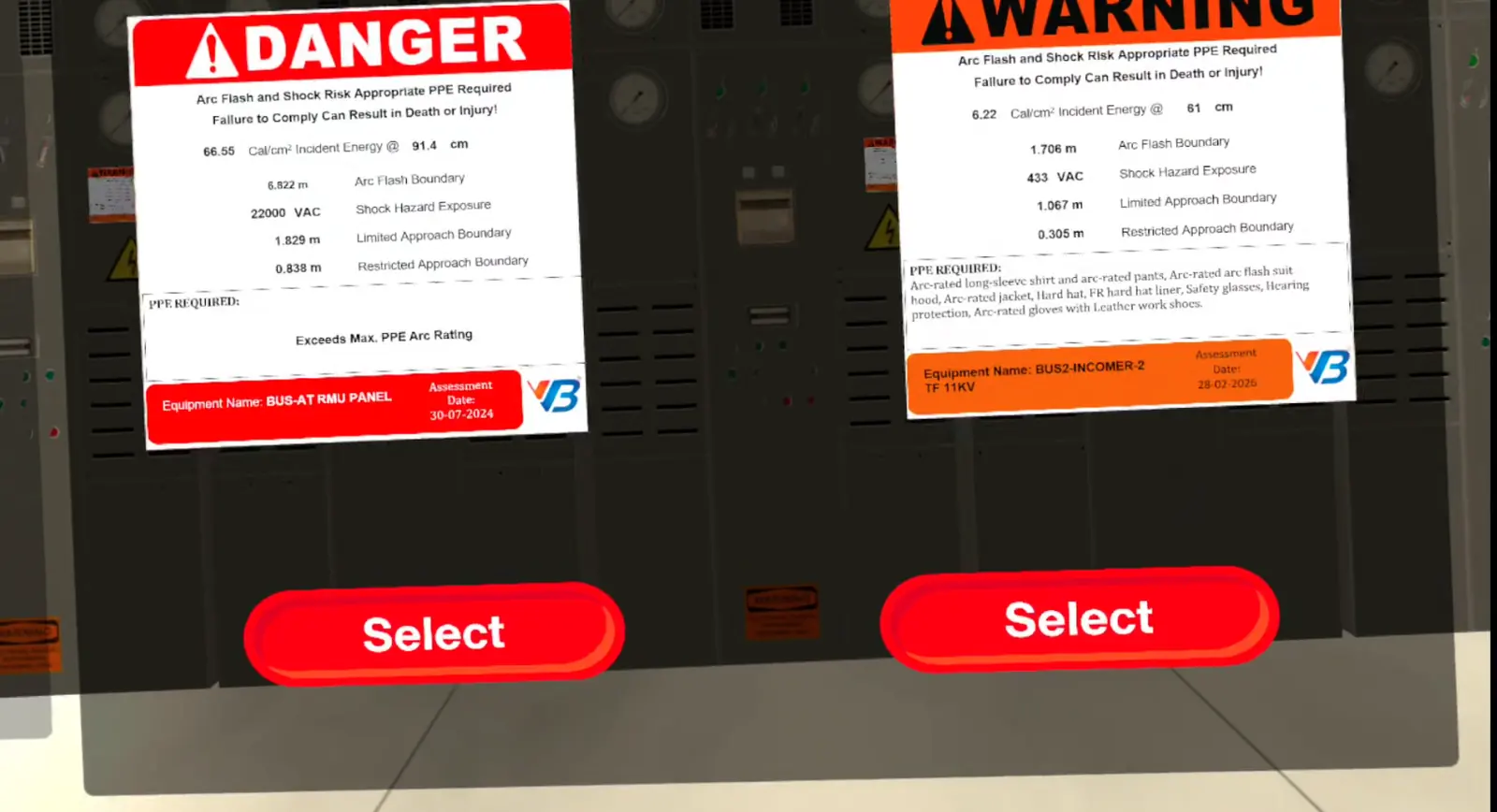
Drona Arc Flash simulator: two arc flash labels on a switchgear lineup, a DANGER label and a WARNING label showing incident energy, voltage and arc flash boundary, each with a Select button
SCROLL
Why now

Why trainers and study firms add a simulator in 2027

Trainers and study firms add a simulator because NFPA 70E expects each worker's proficiency to be shown on specific tasks and equipment, and recorded when it is shown. Classroom slides cannot produce that evidence. Hands-on NFPA 70E training on a simulator can, at every client site, without energizing a panel.

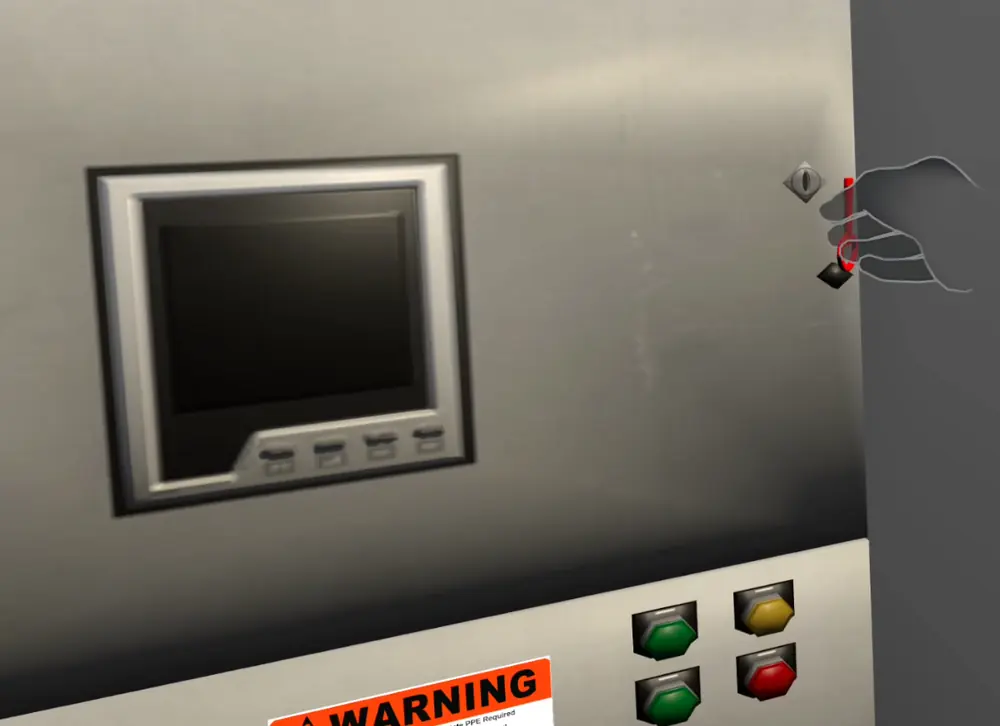
01Simulated switchgear cubicle door with HMI display, indicator lamps and an orange arc flash warning label
Qualification is task-specific

Qualified for this task, on this equipment

Per the 2027 edition, 110.6(A)(1)(c) treats qualification as task- and equipment-specific. A worker can be qualified on a 480 V motor control center and unqualified on medium-voltage switchgear. Training has to follow the equipment the worker actually touches.
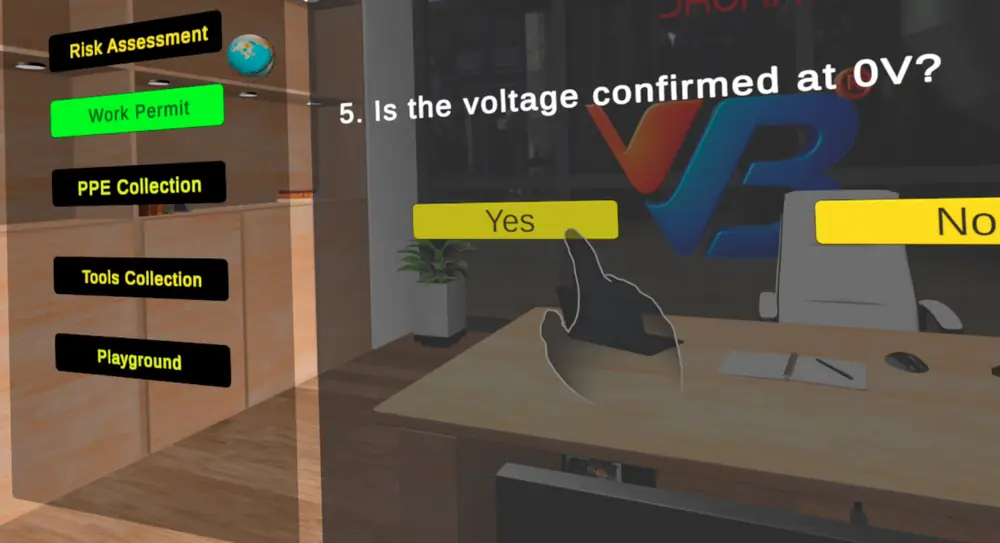
02Simulator work permit step asking whether the voltage is confirmed at 0 V, with Yes and No buttons
Evidence at the moment

Documentation made when proficiency is demonstrated

Per the 2027 edition, 110.6(A)(5) requires the training record to be made when the employee demonstrates proficiency, not when a course ends. A simulator session with a supervisor watching creates that record on the spot.

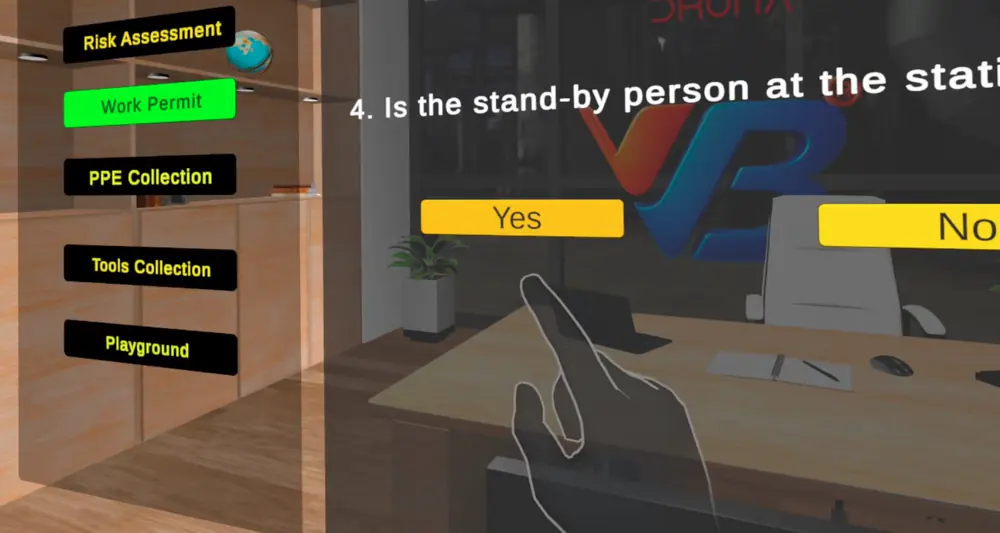
03Simulator work permit step asking whether the stand-by person is at the station
New standby role

The additional person for permitted energized work

Per the 2027 edition, 130.2(A)(2) adds an additional (standby) person, trained in emergency response, whenever an energized electrical work permit calls for shock or arc flash PPE. Every permitted job now needs two trained people, not one.

Scope

What the simulator covers

The simulator covers the full energized-work cycle in four steps, using your client's own arc flash labels. It is NFPA 70E VR training built for the equipment in your study, not generic scenes.

  1. Step 1 of 4

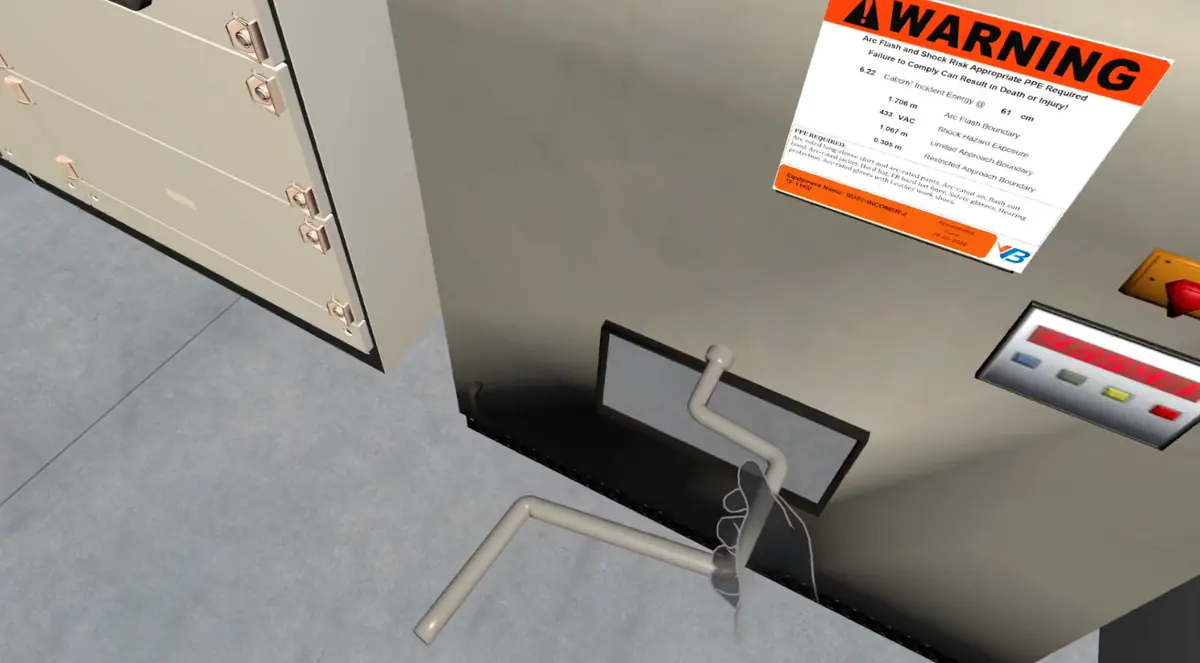
    Read the label

    The worker reads the plant's arc flash label: nominal voltage, incident energy, arc flash boundary and approach limits.

    Simulated switchgear cubicle with an orange arc flash and shock hazard warning label
  2. Step 2 of 4

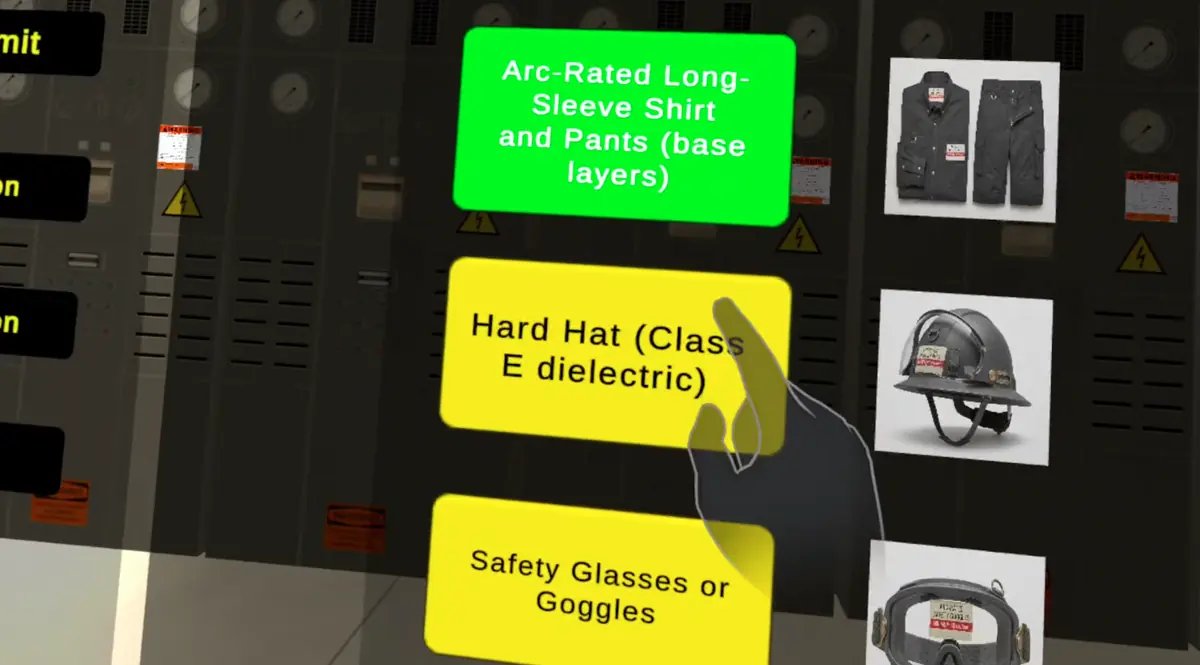
    Select PPE by incident energy

    Selects arc-rated clothing, face and head protection and gloves rated for the incident energy on the label.

    Simulator PPE selection: arc-rated long-sleeve shirt and pants highlighted, with hard hat and safety glasses options
  3. Step 3 of 4

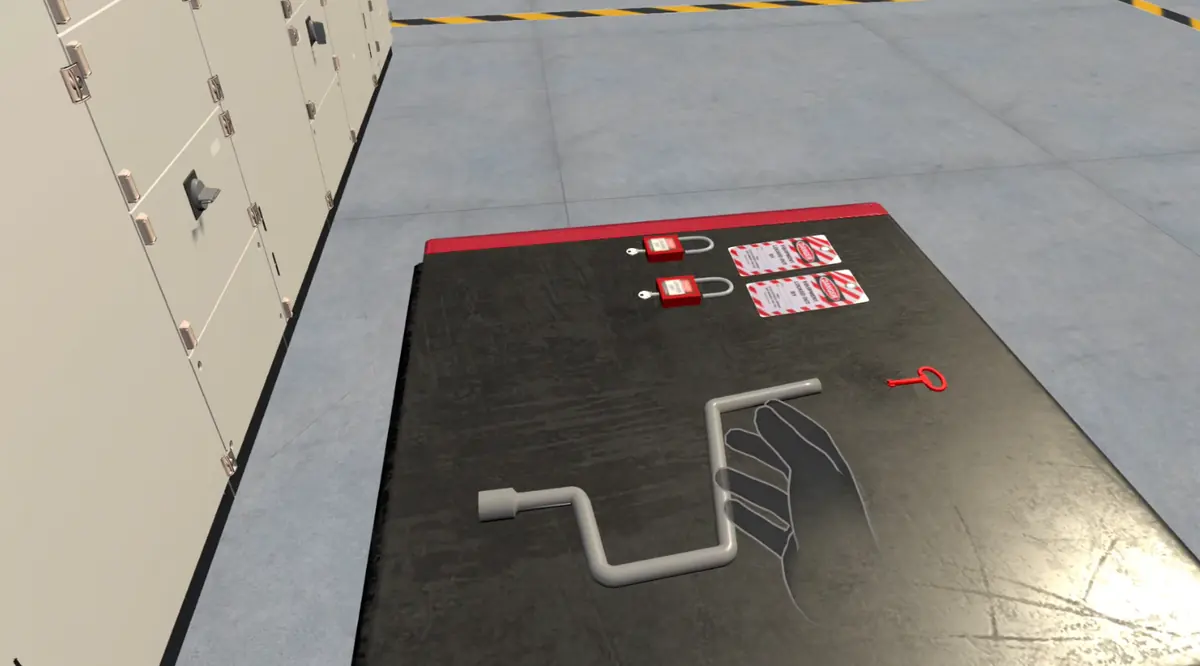
    Apply LOTO

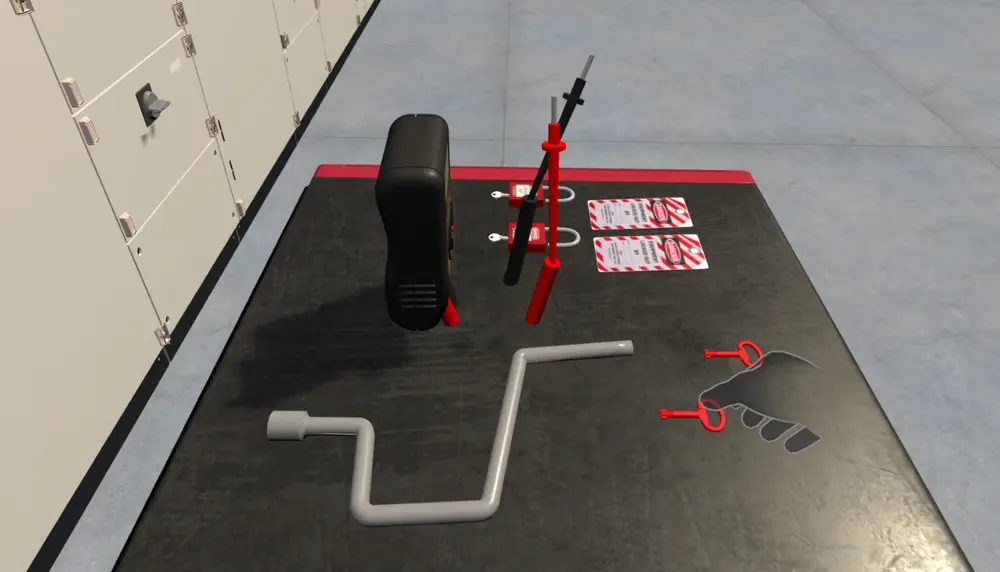
    Isolates the energy source, applies lock and tag, and follows the plant's lockout sequence in order.

    Simulated insulated mat with red padlocks, danger lockout tags and a racking handle
  4. Step 4 of 4

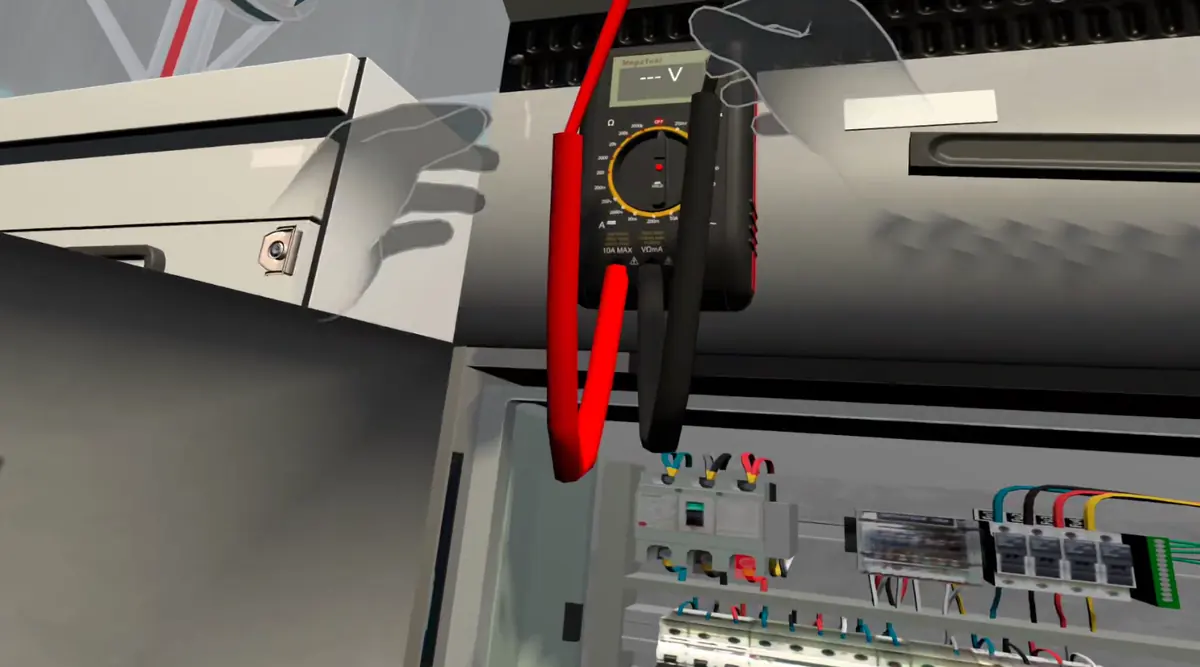
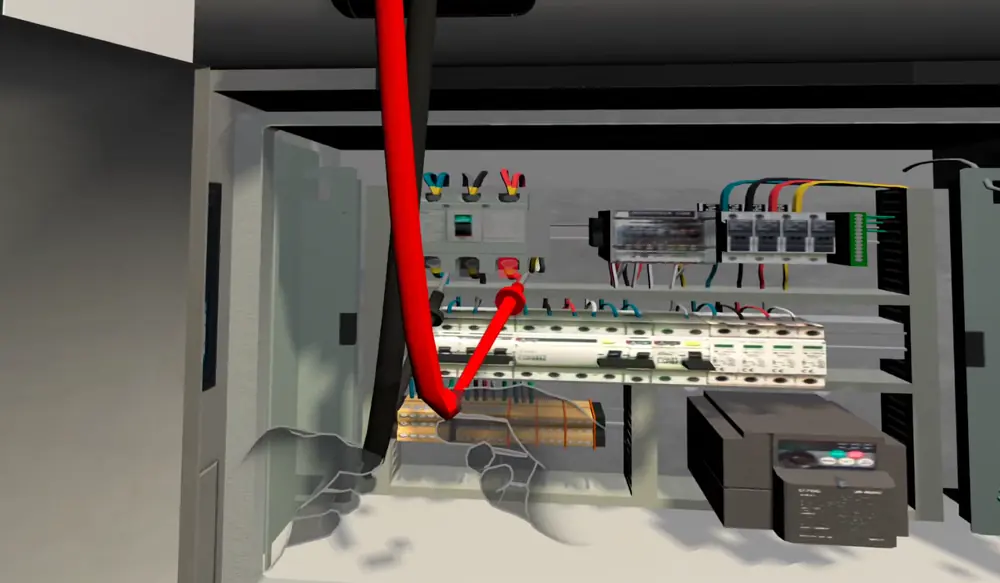
    Verify absence of voltage

    Runs the live-dead-live test: proves the meter on a known source, tests the circuit, then re-proves the meter.

    Simulator view of a multimeter with test leads over breakers inside an open low-voltage panel

Train mode and assess mode

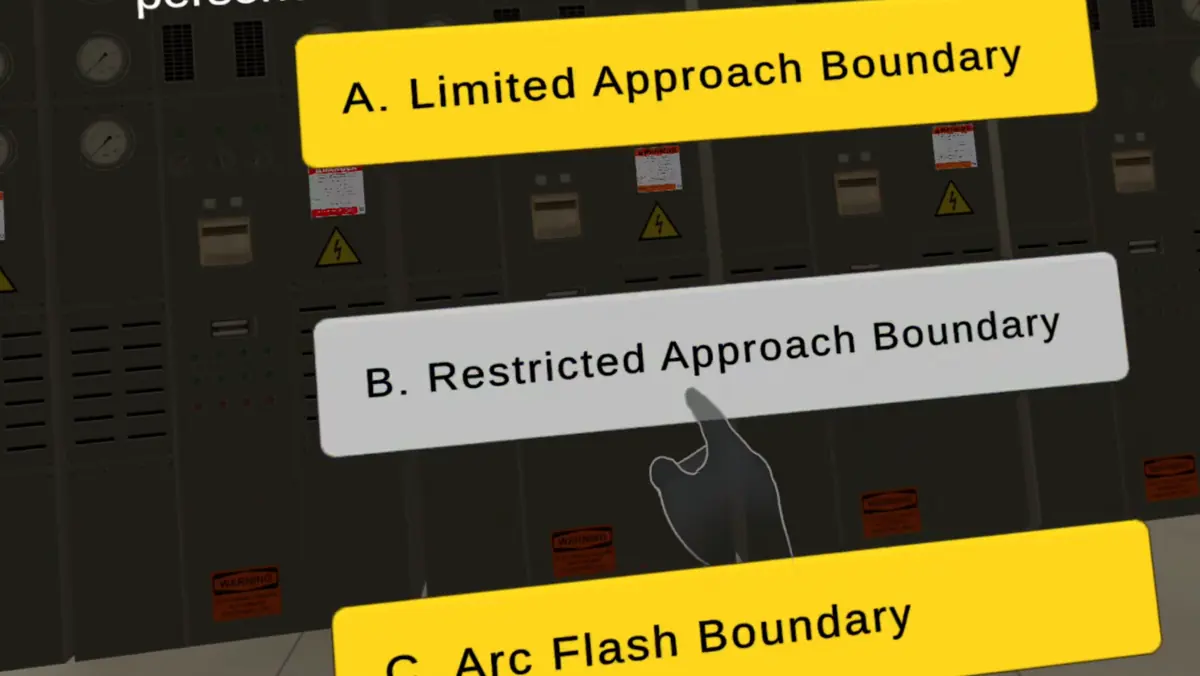
Simulator question on approach boundaries with Limited Approach, Restricted Approach and Arc Flash Boundary options
Train mode · guided

Guided. Hints, step prompts and instant feedback on each decision.

Use it for first exposure, refreshers and retraining after a revised study.

  • Step prompts at every decision point
  • Instant feedback on wrong choices
  • Repeat any step until it is right
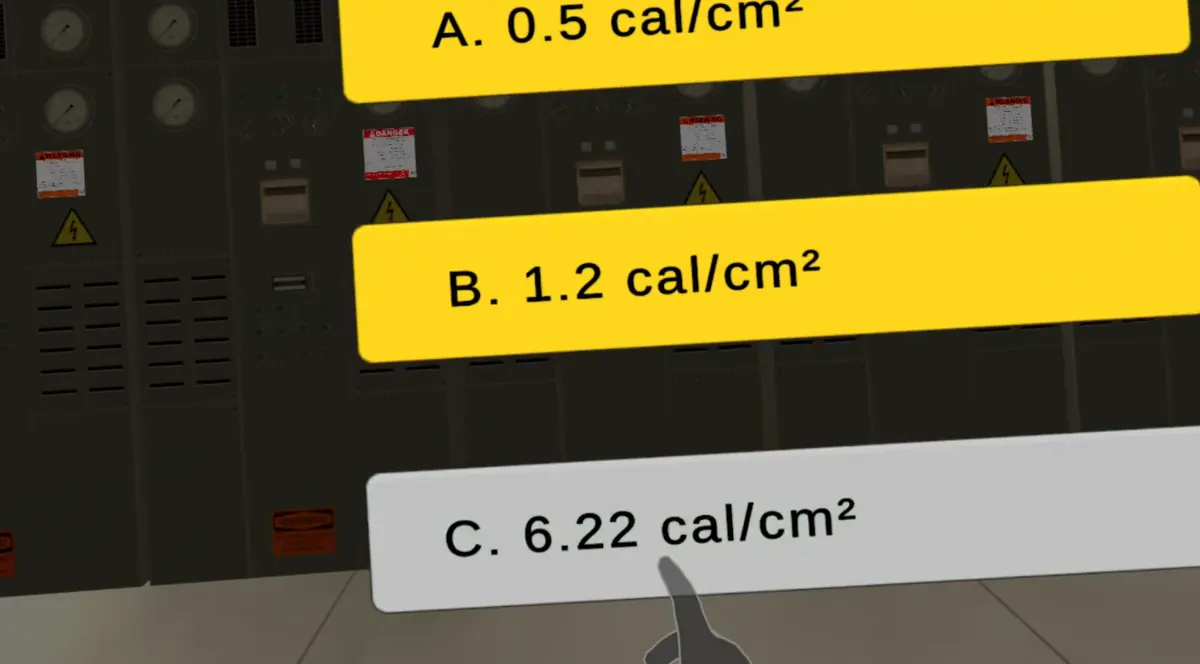
Simulator assessment question on incident energy with three cal/cm² answer options
Assess mode · no hints

No hints. Randomised scenario values and fault conditions.

Auto-fail on critical errors such as wrong PPE rating or skipping the voltage test. Use it for demonstrated proficiency, recorded per worker and attested by a supervisor.

  • Randomised label values each attempt
  • Auto-fail on critical errors
  • Scored rubric and supervisor sign-off
See assess mode in a demo

The Drona Arc Flash module runs on compatible headsets: Meta Quest 3 and 3S, Pico 4 Enterprise and HTC Vive Focus. See the full Arc Flash Safety module.

Evidence

What your client's auditor sees

The auditor sees one record per worker, per task: who did it, on which equipment, the score, and which supervisor attested it live. This is what NFPA 70E training documentation requirements ask for, produced at the moment proficiency is demonstrated.

  • Supervisors watch every assess-mode session on Trainer Cast View and sign off in the session.
  • The Drona platform stores operator ID, scenario, timestamp, scoring rubric and supervisor sign-off.
  • Records export to PDF or the client's LMS.
Illustrative sample with anonymised data. The record supports NFPA 70E documentation; the employer designates who is qualified.
Partner model

How the partnership works

The partner sells and delivers, Drona runs the simulation and records, and the client designates who is qualified. The Drona VR safety training partner program is built for firms that sell arc flash study and training together and want to keep the client relationship.

Roles in the Drona partnership
WhoDoes
PartnerSells to the client, owns the relationship, supplies the arc flash study data (labels, boundaries, PPE categories) and delivers the training.
DronaBuilds and maintains the simulation, runs the platform and per-worker records, and hosts client data on US AWS infrastructure.
ClientDesignates which workers are qualified, for which tasks and equipment, using the records as evidence.
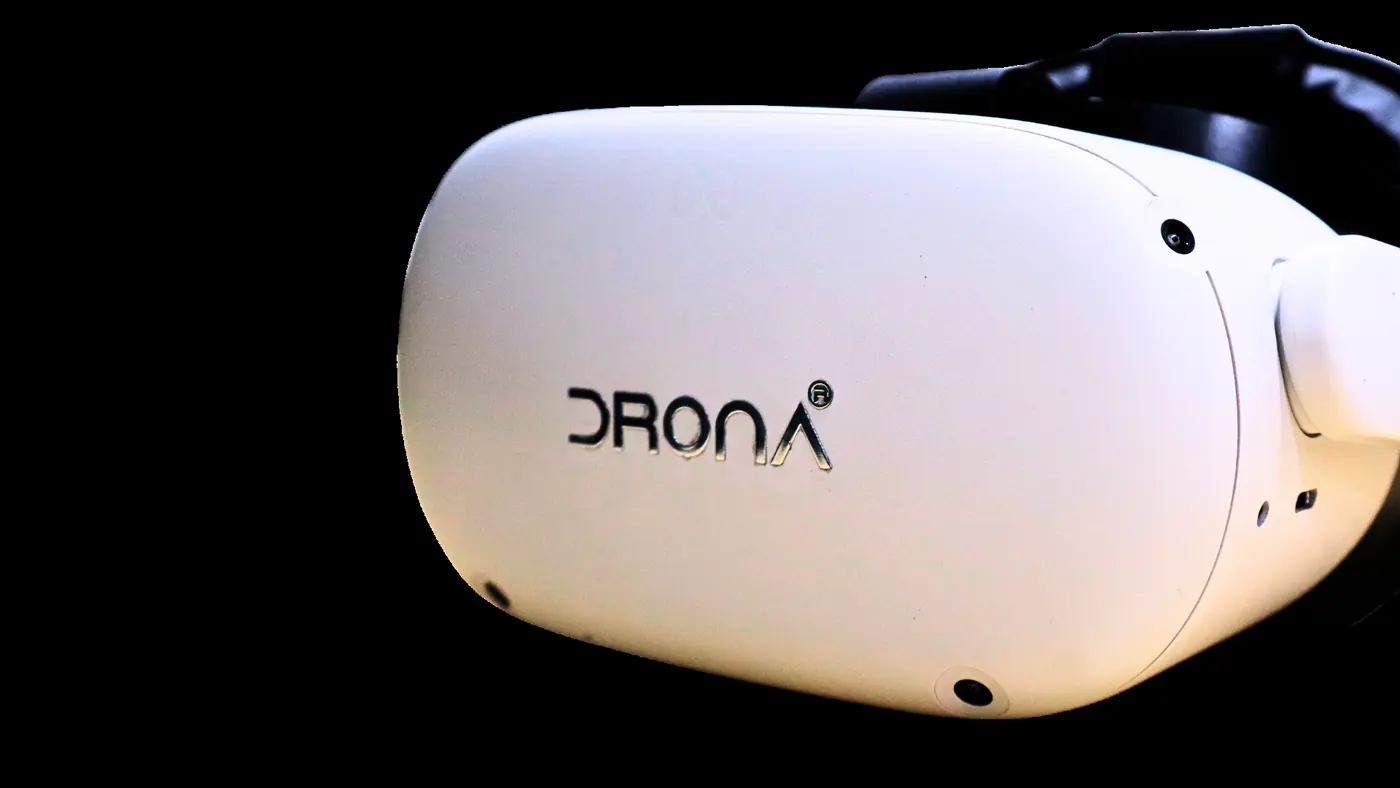
Drona VR headset in side profile on a black background

Under your brand, Powered by Drona.

Your logo, your course name and your instructors. Clients see a single line crediting Drona as the simulation provider.

Licensing and white-label options

Drona licenses the simulator rather than selling a box, so partners get content updates when the standard changes. Firms searching for an arc flash training simulator for sale usually want one of three things, and each maps to a licence:

White-label partner licence

White label safety training content under your brand, priced by client sites and workers covered.

Institute licence

For training institutes running scheduled qualified-person courses at their own facility, with headsets on site.

Study-bundled licence

For study firms that attach training to every new or revised arc flash study they deliver.

Partner terms are quoted on request. Facility pricing is published on the pricing page.

NFPA 70E train the trainer for partner instructors

Drona onboards your instructors on running train and assess sessions, reading the rubric and attesting on Trainer Cast View, so your team delivers the simulator the same way at every client.

Live demo

Put a headset on your lead instructor

Watch one worker run the full cycle, from label to live-dead-live, while you see the supervisor view. On-site in Texas, Louisiana and Oklahoma; by video call everywhere else.

Standards

NFPA 70E and OSHA: how Drona supports compliance

Drona supports compliance by producing the training evidence these clauses ask for. It does not qualify workers; the employer does. NFPA 70E clause numbers below are per the 2027 edition.

ClauseRequirementWhat Drona provides
NFPA 70E 110.6(A)(1)(c)Qualification is specific to tasks and equipment. A person can be qualified for some and unqualified for others.Scenarios configured per task and equipment class; each record names the equipment tag.
NFPA 70E 110.6(A)(1)(e)The employer confirms, through regular supervision or inspection at least annually, that qualified persons follow safety-related work practices.Assess-mode sessions attested live by a supervisor, with a per-worker annual re-assessment date.
NFPA 70E 110.6(A)(4)Retraining at intervals not exceeding three years, and when new equipment or changed procedures call for different work practices.Updated label values loaded after a revised study, with workers re-assessed against them.
NFPA 70E 110.6(A)(5)Documentation made when the employee demonstrates proficiency, showing content, name and dates, kept for the duration of employment.Per-worker record with scenario, timestamp, rubric score and supervisor sign-off, exportable to PDF or LMS.
NFPA 70E 110.6(C)Emergency response training, including contact release refreshed annually, plus first aid, CPR and AED as required.Not covered by the simulator. Partners deliver NFPA 70E contact release annual training, CPR and AED with an accredited provider.
OSHA 1910.332(b)(3) and (c)Qualified persons trained to distinguish exposed live parts, determine nominal voltage and know clearance distances. Training may be classroom or on-the-job.Scenarios require the worker to identify exposed parts, read nominal voltage from the label and hold approach boundaries.

Sources: NFPA 70E, Standard for Electrical Safety in the Workplace · OSHA 29 CFR 1910.332. Drona is an electrical safety training simulator aligned with NFPA 70E®. It supports NFPA 70E documentation; the employer decides who is qualified.

Answers

Frequently asked questions

Can VR training satisfy the NFPA 70E requirement to demonstrate proficiency?

NFPA 70E does not name a training medium. It allows classroom, on-the-job or combined training, and its informational note says classroom training can include interactive electronic components. VR can record demonstrated procedural proficiency. The employer still decides who is qualified, and physical skills need a field check-off by a supervisor.

Can I license VR arc flash training content for my own courses?

Yes. Drona licenses its VR arc flash training simulator to arc flash study firms, NFPA 70E trainers and training institutes to run under their own brand. Partners own the client relationship and delivery. Drona provides the simulation, supervisor attestation and per-worker records. Terms depend on sites and workers covered.

Does a revised arc flash study mean workers must be retrained?

Usually, yes. NFPA 70E requires retraining at least every three years and whenever new equipment or changed procedures call for different work practices. A revised study changes labels, boundaries and PPE categories, so workers exposed to that equipment should be retrained on the new values and their proficiency re-documented.

How can an arc flash study firm add NFPA 70E training to its services?

Attach training to the study you already deliver. The study produces labels, arc flash boundaries and PPE categories. A simulator turns them into hands-on practice with per-worker proficiency records. Drona Arc Flash runs under the study firm's brand, so the firm keeps the client and gains a recurring training line.

How do you document NFPA 70E qualified person training for an audit?

NFPA 70E requires documentation made when the employee demonstrates proficiency, showing the training content, the employee's name and dates, kept for the duration of employment. Lockout/tagout and emergency response training need their own records. An audit-ready file holds per-task results with the supervisor's sign-off.

Who needs training for the NFPA 70E 2027 additional person requirement?

Under the 2027 edition, any energized electrical work permit that calls for shock or arc flash PPE also requires a second, standby worker trained in emergency response. That person waits outside both the arc flash boundary and the limited approach boundary, and needs contact-release, CPR and AED training.

How much does VR safety training cost?

Off-the-shelf VR modules are usually licensed per user, while plant-specific simulations are priced per site. Drona's published US tiers run from about US$14,000 to US$30,000 for a single-site pilot and US$42,000 to US$95,000 for a full plant programme in year one, including headsets. Partner licensing is quoted separately.

Full enterprise VR training cost breakdown →

Is arc flash training required by OSHA?

OSHA does not adopt NFPA 70E by name, but 29 CFR 1910.332 requires qualified persons to be trained to recognise exposed live parts, determine nominal voltage and apply clearance distances. US employers commonly follow NFPA 70E as the recognised way to meet OSHA's electrical safety requirements.

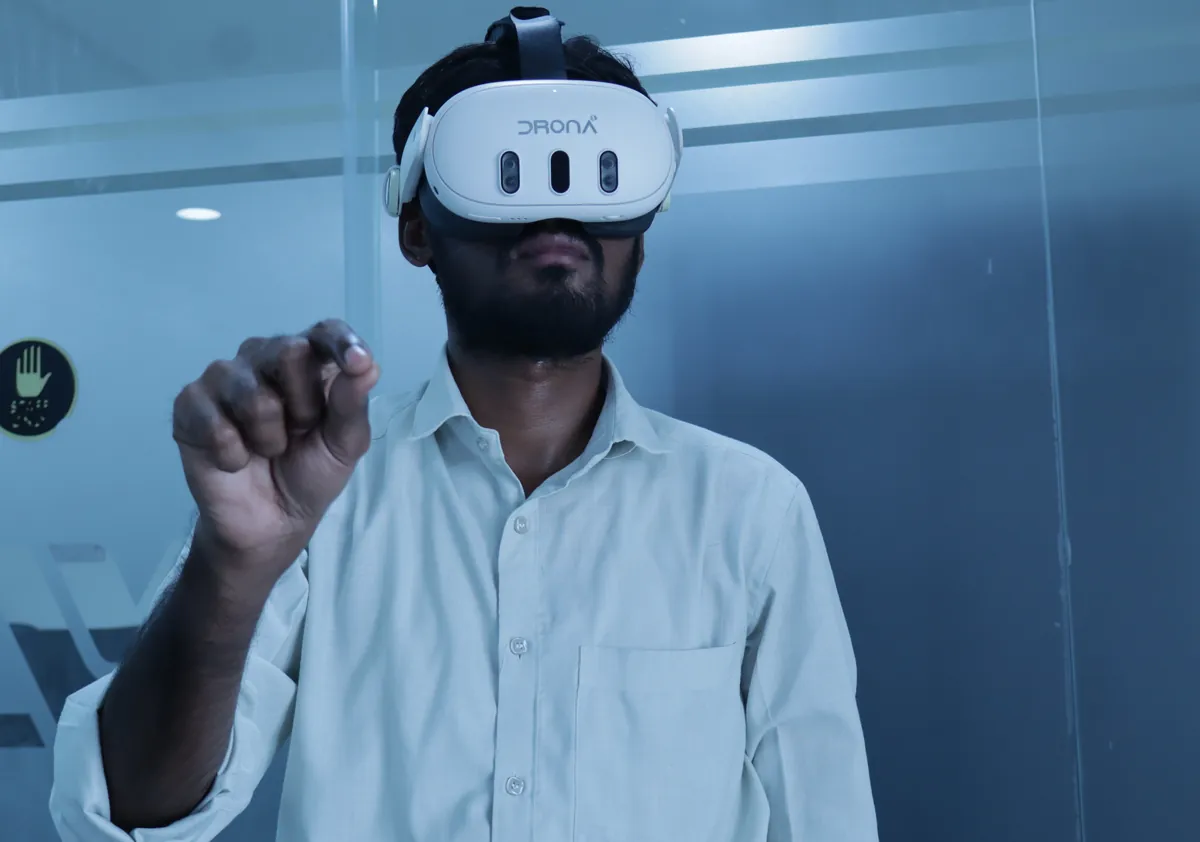
Trainee in a white Drona VR headset using a hand-tracking pinch gesture during a training session
Facility teams

For facilities

Facility EHS and electrical managers can run Drona Arc Flash through a local partner who already knows NFPA 70E, or directly with our Katy team. Tell us your site and we will connect you to a partner or book a demo.

Find a Drona partner near you / request a demo
Next step

Add a simulator to your NFPA 70E courses

Request partner terms, a demo or the checklist through one short form, and we will reply within one business day from Katy, Texas. On-site demo visits are available in Texas, Louisiana and Oklahoma; elsewhere we run the demo by video call.

NFPA 70E® is a registered trademark of the National Fire Protection Association. Drona VR is not affiliated with or endorsed by NFPA. Meta Quest, Pico and HTC Vive are trademarks of their respective owners; Drona runs on compatible hardware. More on Drona in the US: Drona VR United States.