
Work at height incidents cut by 38%.
A multi-site Indian EPC contractor used Drona VR Work at Height modules across active project sites — no Wi-Fi infrastructure required. Harness inspection competency reached 100%. Incidents fell 38% in the first quarter.
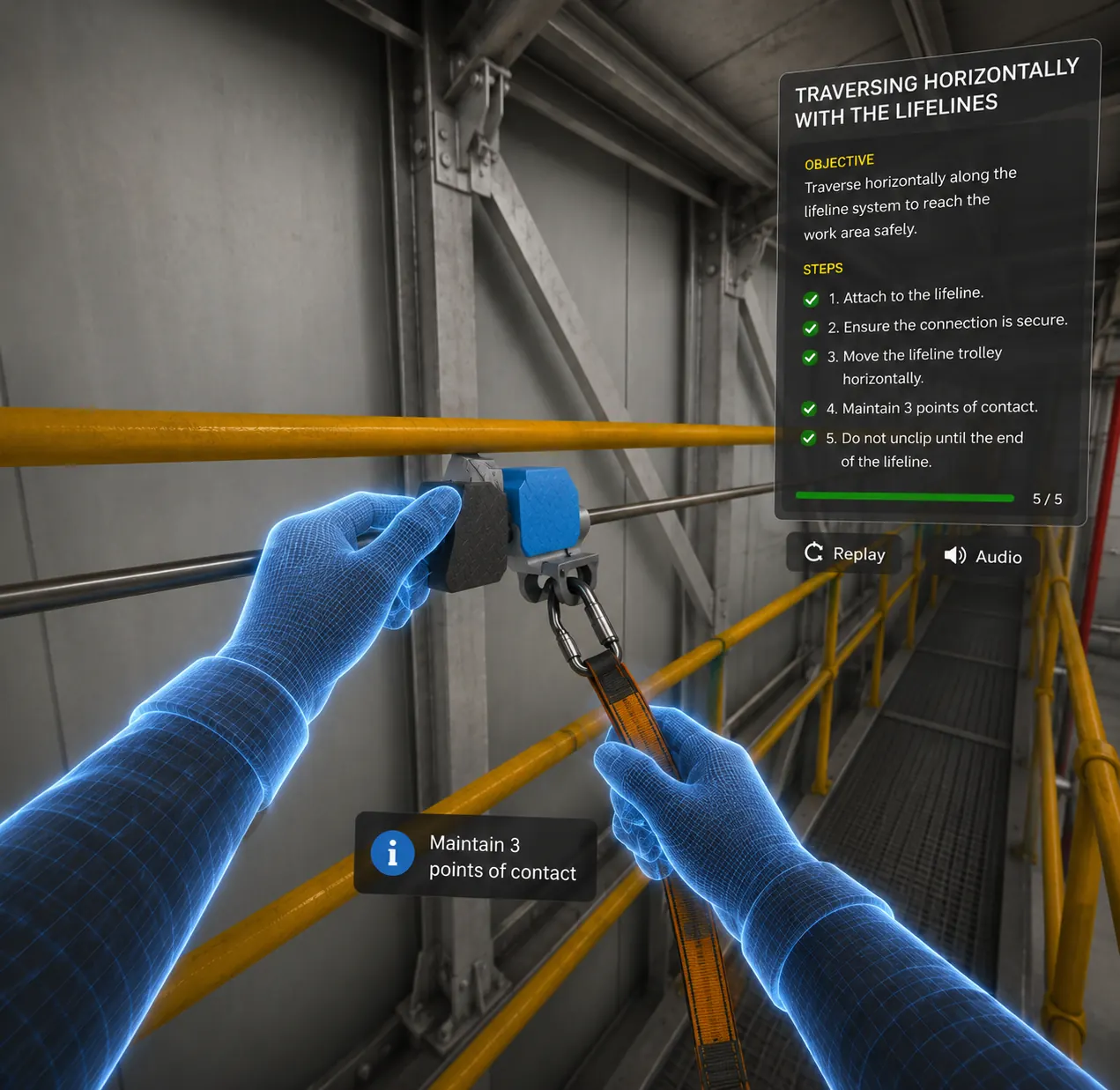
Greenfield sites had no network. Training delayed start of work.
Indian EPC contractor
Indian EPC contractor with multiple active project sites — power, infrastructure, and industrial construction.
New project sites took weeks to provision network. Operator training depended on connectivity. The customer's schedule pressure was acute.
Module deployed: Work at Height.
Drona VR's offline-first runtime made site rollout trivial. Headsets arrived with content pre-loaded. Operators trained on day one of mobilisation, not week three.
Deployment timeline.
Numbers from 90 days post-deployment.
Incident rate.
Work-at-height incidents declined ~38% across project portfolio in 90 days.
Harness inspection.
Every operator passed harness inspection competency in evaluation.
Network requirement.
No site needed Wi-Fi to deploy training. Training started on day one of mobilisation.
Documentation aligned.
Per-learner records aligned with OSHA 1926.501 documentation expectations.
Greenfield sites without Wi-Fi were a black hole for training. Drona changed that — operators arrived, trained, got certified, got to work.
Three modules. One platform.
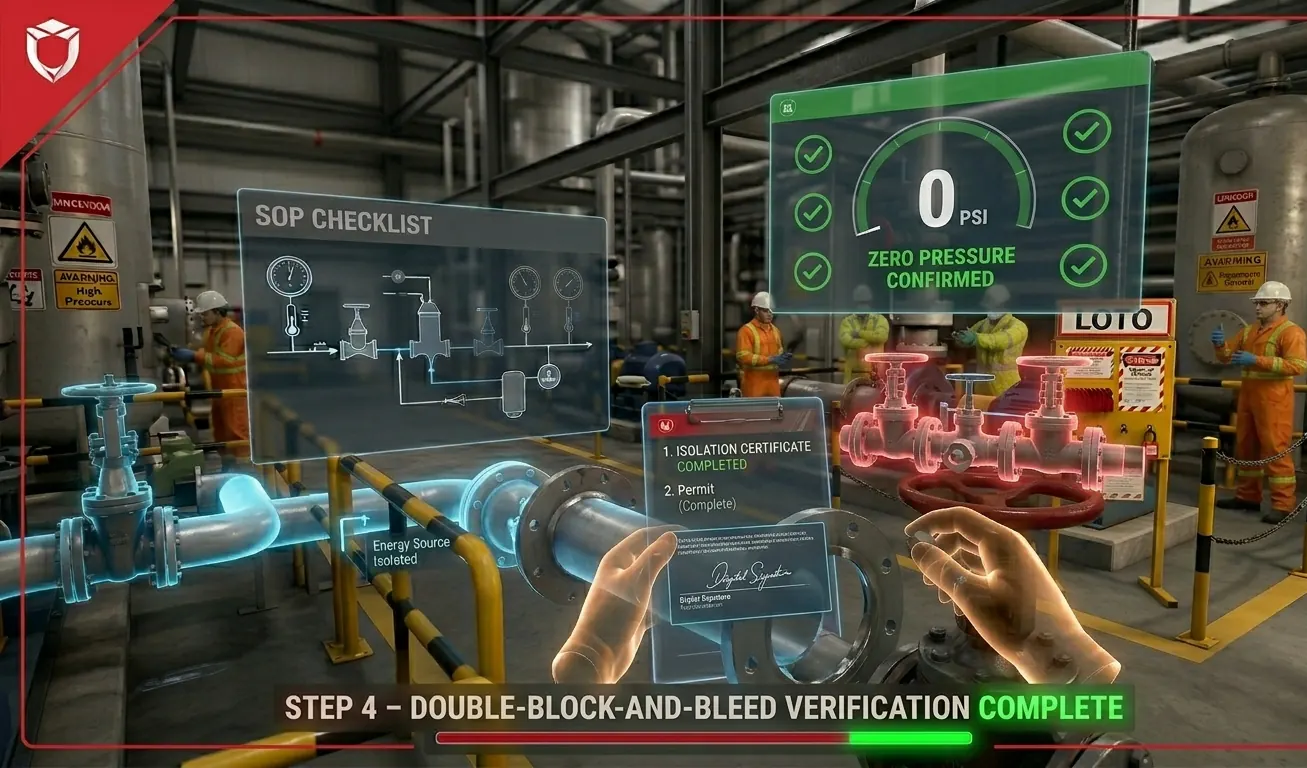
Three takeaways from this deployment.
Mobilisation is the bottleneck.
For multi-site EPCs, schedule pressure makes mobilisation training the highest-impact VR use case.
Headset-rotation works.
A small fleet of headsets rotated across sites was more cost-effective than provisioning at every site.
Insurance and incident rate correlate.
Documented incident reduction within one quarter triggered insurance review.
Train construction for the work where mistakes are audit findings.
Book a 15-minute discovery call. We will walk you through the modules deployed in this case study, on a real headset, with your SOP language.